
Serendipitous Lifeboat Demonstrations — Summer 1997

~
The Great Lakes… 84% of the continent’s fresh water… a different story in every drop.
Author: David D. Swayze
About the Author: David D. Swayze is editor of the Modoc Whistle, a publication of the Saginaw Marine Historical Society. He is also author of marine articles for other Great Lakes publications.
Note: The sources of this work are eight articles which appeared in the Detroit Free Press and Buffalo Democracy contemporary to the incidents.
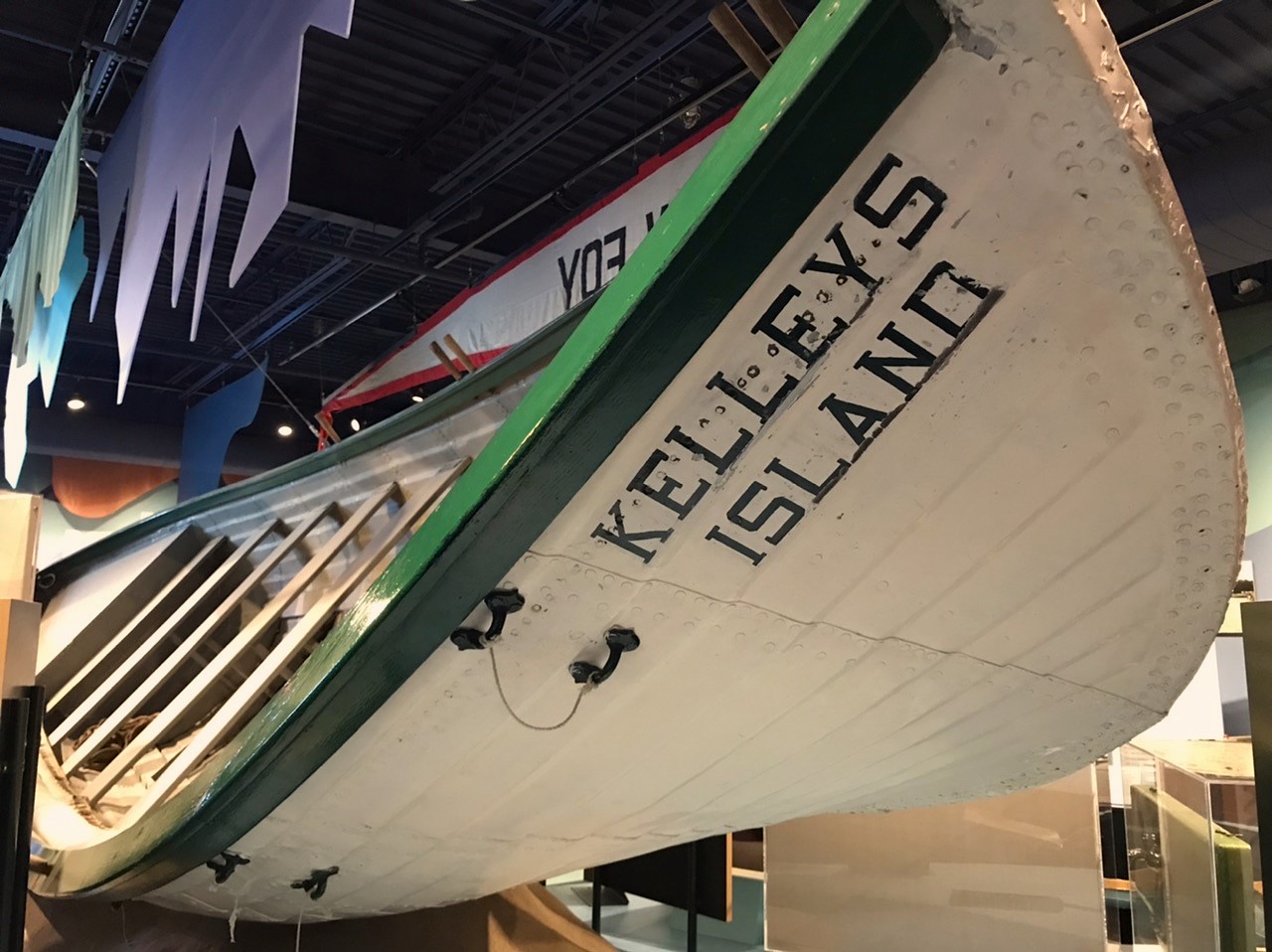
The Francis surfboat at the National Museum of the Great Lakes in Toledo. The boat is painted white with green trim. There is green lettering on the white exterior of the boat that says Kelleys Island.
Early in the shipping season of 1854, the U.S. Lighthouse Service made the decision to equip some of its Great Lakes lighthouses with the new Francis Metallic Life-boats, the latest in lifesaving technology. The boats were shipped from the east coast and duly arrived in Buffalo during that summer. They eventually were brought to the Lake Erie docks to await shipment to various far lakes outposts.
Four of the boats were destined for Lake Michigan ports, including two to H.M. Fuller, lightkeeper at Chicago, one to Reuben W. Smith at New Buffalo, Michigan, and one to keeper Thomas Fitzgerald of the St. Joseph Light.
The boats languished on the dock for a good long time and in early October, a Buffalo newspaper chided the government, saying tersely that the boats “should be forwarded, for the season when they will be required the most has now arrived.” Whether the news story had any effect or not, by late October four of the boats had finally been loaded as deck cargo on Watson A. Fox’s brigantine 𝘕𝘰𝘳𝘵𝘩𝘩𝘢𝘮𝘱𝘵𝘰𝘯, bound for Chicago with a load of railroad iron and general merchandise, as well as eight hundred barrels of apples.
By the early morning hours of November 2, the 𝘕𝘰𝘳𝘵𝘩𝘩𝘢𝘮𝘱𝘵𝘰𝘯 was battling a gale in northern Lake Huron and was losing her fight to stay off the beach. The shrieking wind and roaring greybeards had ruined her foremast rigging and severely damaged her centerboard. While floundering almost helplessly in toward shelter in appalling conditions, the little 242-ton brig missed stays and drove on the southeast tip of Thunder Bay Island, a notorious snag for distressed ships.
𝘕𝘰𝘳𝘵𝘩𝘩𝘢𝘮𝘱𝘵𝘰𝘯 began to capsize and break up and, rather than struggle with the brig’s tiny and inadequate yawl, her crew unshipped one of the Francis boats and scrambled aboard.
J.J. Malden, keeper of the Thunder Bay Island light, witnessed the entire struggle, and later wrote that, “the sea ran very high, but the boat lived nobly through the breakers.” Keeper Malden said the shores of the area were strewn with apples for miles, but the 𝘕𝘰𝘳𝘵𝘩𝘩𝘢𝘮𝘱𝘵𝘰𝘯‘𝘴 crew had been carried over the rocky beach which had claimed the lives of so many sailors.
The loss of the 𝘕𝘰𝘳𝘵𝘩𝘩𝘢𝘮𝘱𝘵𝘰𝘯 left the Lake Michigan lighthouses without the new lifeboats, and the government acted to replace the shipment with haste. Though the season was late, two more boats were lashed to the deck of the barkentine 𝘛𝘳𝘢𝘥𝘦 𝘞𝘪𝘯𝘥 before November closed. She was also bound for Chicago, with a cargo that included more railroad iron and a consignment of 1,000 stoves.
The large metal lifeboats consumed a large portion of the bark’s deck space and her sailors grumbled heartily about them in the early part of the voyage. Captain Judson, to soothe their ruffled fur, remarked that the boats might be of some service before they had made it to Chicago. Perhaps he had heard the details of the 𝘕𝘰𝘳𝘵𝘩𝘩𝘢𝘮𝘱𝘵𝘰𝘯‘𝘴 loss.
On the 30th of November the 𝘛𝘳𝘢𝘥𝘦 𝘞𝘪𝘯𝘥 was tacking into a blinding snow near Long Point, Lake Erie, when a gray shape loomed up without warning. It was the upbound Canadian brig 𝘚𝘪𝘳 𝘊𝘩𝘢𝘳𝘭𝘦𝘴 𝘕𝘢𝘱𝘪𝘦𝘳 on the opposite tack. The brig nearly cut by aft of 𝘛𝘳𝘢𝘥𝘦 𝘞𝘪𝘯𝘥, but struck her near the after cabin, and the bark’s crew could hear the splintering of the big vessel’s stern timbers and those of the yawlboat which hung there. As the interloper staggered off into the whiteness, the men made haste to repeat the scene that had taken place on the 𝘕𝘰𝘳𝘵𝘩𝘩𝘢𝘮𝘱𝘵𝘰𝘯 barely a month before. They were able to cut the lashings and board one of the big lifeboats just as the 𝘛𝘳𝘢𝘥𝘦 𝘞𝘪𝘯𝘥 went out from under them. Many must have recalled Captain Judson’s prophetic words as they pulled for the Canadian shore. Two entire crews now owed their lives to the new government lifeboats.
On the very day that the news of the 𝘛𝘳𝘢𝘥𝘦 𝘞𝘪𝘯𝘥‘𝘴 loss reached Buffalo, a letter appeared in that city’s press, signed by Captain Day of the 𝘕𝘰𝘳𝘵𝘩𝘩𝘢𝘮𝘱𝘵𝘰𝘯 and some of his crew. The testimonial stated, “The well-constructed Life-boat deserves the notice of all sea-going men, and the praise of those who have witnessed its surpassing adaptation for the purpose intended. These boats are capable of landing in safety through any surf that can make it on the shores of our western lakes in the most terrific gales of wind, or remain at sea when a common vessel would flounder.”
It was not reported when the southern Lake Michigan lightkeepers finally received their long-awaited lifeboats, for the shipment had been delayed by the desire of the Great Lakes autumn to give them their first “real-world” test.
Read More of Inland Seas Online

